Step 1
Step 2

 Choose an example of architecture in East Asian countries where modern and traditional elements are harmonized, and then write a short description introducing it.
Modern Architectures in East Asia
Name of the
Building
Building
Nation
Architect
Traditional Element
Modern Element
DDP
(Dongdaemun
Design Plaza)
(Dongdaemun
Design Plaza)
South
Korea
Korea
Zaha
Hadid
Hadid
Design inspired by the traditional
Korean bojagi (wrapping cloth) and
hanbok (traditional clothing)
Korean bojagi (wrapping cloth) and
hanbok (traditional clothing)
Futuristic and experimental
architectural design, advanced
technological features, and
all-purpose event spaces
architectural design, advanced
technological features, and
all-purpose event spaces
Guangzhou
Opera House
Opera House
China
Zaha
Hadid
Hadid
Conceptualized as pebbles in a
river, inspired by traditional Chinese
ceramics and the concept of yin
and Yang
river, inspired by traditional Chinese
ceramics and the concept of yin
and Yang
Cutting-edge design, curved
forms, and innovative use of glass
and steel
forms, and innovative use of glass
and steel
Tokyo
International
Forum
International
Forum
Japan
Rafael
Viñoly
Viñoly
Inspiration from traditional
Japanese design principles such as
open spaces, wood elements, and
harmony with nature
Japanese design principles such as
open spaces, wood elements, and
harmony with nature
Futuristic glass and steel structure,
innovative architecture, and
advanced technology
innovative architecture, and
advanced technology
Choose an example of architecture in East Asian countries where modern and traditional elements are harmonized, and then write a short description introducing it.
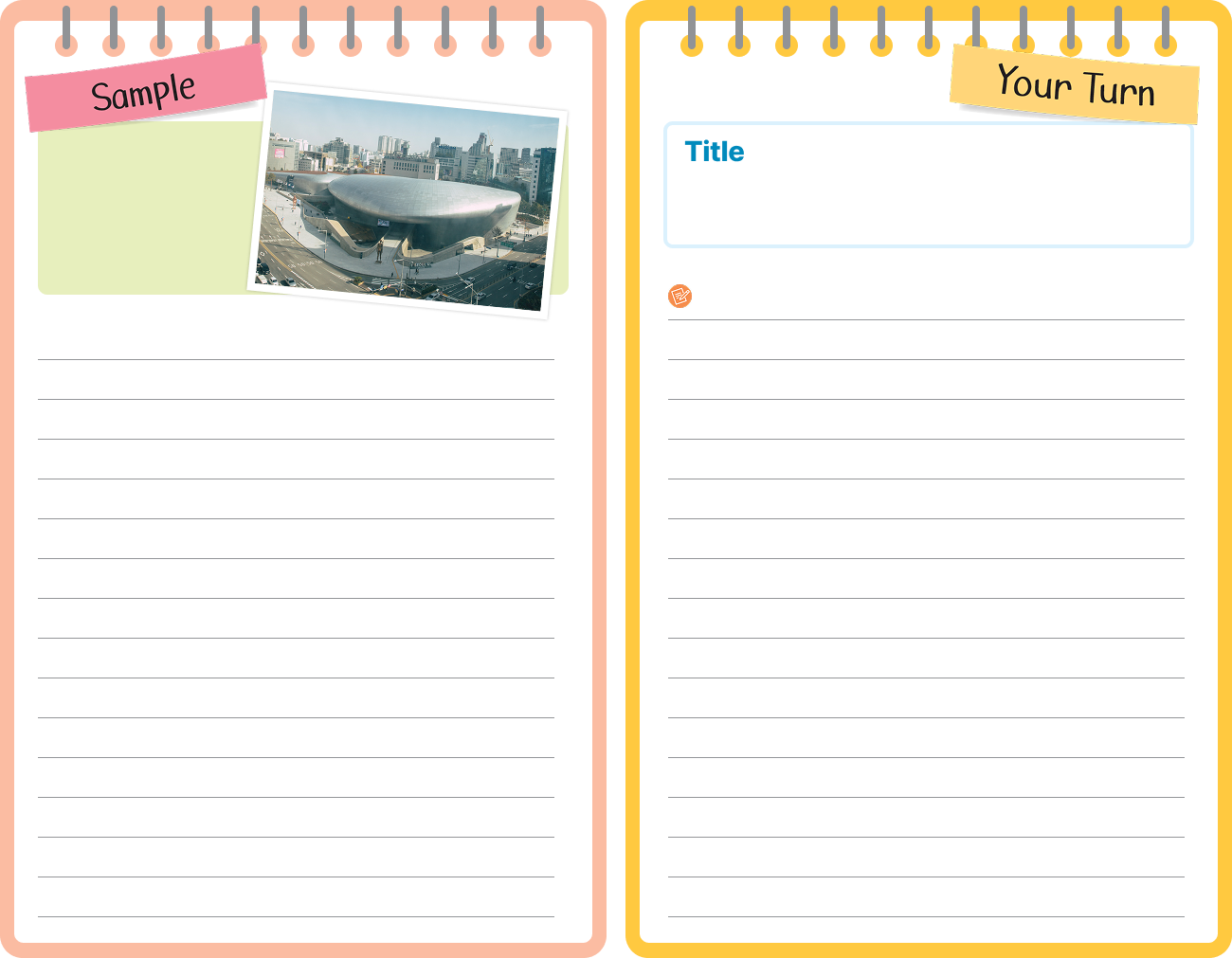
DDP
South Korea
Zaha Hadid
Architects
South Korea
Zaha Hadid
Architects
DDP, designed by architect Zaha Hadid,
perfectly blends tradition and innovation.
Drawing inspiration from traditional Korean
bojagi and hanbok, it incorporates
elements that deeply respect our heritage.
Moreover, DDP stands as a symbol of
futuristic architectural design, with its
attractive fusion of glass and steel. It’s not
just a building; it’s a testament modern
experimental creativity.
perfectly blends tradition and innovation.
Drawing inspiration from traditional Korean
bojagi and hanbok, it incorporates
elements that deeply respect our heritage.
Moreover, DDP stands as a symbol of
futuristic architectural design, with its
attractive fusion of glass and steel. It’s not
just a building; it’s a testament modern
experimental creativity.
Guangzhou Opera House
Guangzhou Opera House, envisioned by
architect Zaha Hadid, is a harmonious
blend of tradition and innovation. Drawing
inspiration from traditional Chinese
ceramics and the concept of yin and yang,
the building is conceptualized as pebbles
in a river. Its cutting-edge design features
curved forms, showcasing an innovative
use of glass and steel. Guangzhou Opera
House stands as a symbol of futuristic
architectural design, combining attractive
elements to form a testament to modern
experimental creativity. It transcends
being merely a structure; it is a testament
to the seamless integration of tradition
and cutting-edge innovation.
architect Zaha Hadid, is a harmonious
blend of tradition and innovation. Drawing
inspiration from traditional Chinese
ceramics and the concept of yin and yang,
the building is conceptualized as pebbles
in a river. Its cutting-edge design features
curved forms, showcasing an innovative
use of glass and steel. Guangzhou Opera
House stands as a symbol of futuristic
architectural design, combining attractive
elements to form a testament to modern
experimental creativity. It transcends
being merely a structure; it is a testament
to the seamless integration of tradition
and cutting-edge innovation.