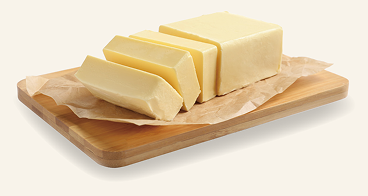
BUTTER

The production of butter has a significant ecological impact, largely
due to greenhouse gas emissions stemming from dairy cows.

Livestock, as a whole, is responsible for up to 16% of greenhouse gas
emissions.
This is because they release methane through burping and
passing gas.
In fact, methane is approximately 28 times more potent
than carbon dioxide in terms of its impact on global warming.
Butter
production also generates carbon dioxide emissions.
On average, the
production of one kilogram of butter emits about 12 kilograms of
carbon dioxide, in contrast to plant-based margarine, which emits
only 3 kilograms per kilogram.
The production of butter has a significant ecological impact, largely due to greenhouse gas emissions stemming from dairy cows.

stemming은 앞에 있는 greenhouse gas emissions를 수식하는 분사구를 이끄는 현재분사이다.

Livestock, as a whole, is responsible for up to 16% of greenhouse gas emissions.

responsible for는 ‘~의 원인이 되는, ~을 초래하는’이라는 뜻이다.

This is because they release methane through burping and passing gas.

This is because는 ‘이것은 ~하기 때문이다’라는 뜻으로 그 뒤에
이유 혹은 원인을 나타내는 절이 이어진다.

In fact, methane is approximately 28 times more potent than carbon dioxide in terms of its impact on global warming.

in terms of는 ‘~의 측면에서’라는 뜻이다.

On average, the production of one kilogram of butter emits about 12 kilograms of carbon dioxide, in contrast to plant-based margarine, which emits only 3 kilograms per kilogram.

which는 관계대명사의 계속적 용법으로, 관계사절을 이끌어 선행사 plant-based margarine에 대한 추가적인 정보를 제공하고 있다.

Read 해석

BUTTER
버터
The production of butter has a significant ecological impact, largely due to greenhouse gas emissions stemming from dairy cows.
버터 생산은 상당한 생태학적 영향을 미치는데, 주로 젖소에서 기인하는 온실가스 배출 때문이다.
Livestock, as a whole, is responsible for up to 16% of greenhouse gas emissions.
가축은 전체적으로 온실가스 배출량 중 최대 16%의 원인이 된다.
This is because they release methane through burping and passing gas.
이는 그들이 트림과 방귀를 통해 메탄을 배출하기 때문이다.
In fact, methane is approximately 28 times more potent than carbon dioxide in terms of its impact on global warming.
실제로 메탄은 지구온난화에 미치는 영향의 측면에서 이산화탄소보다 약 28배 더 강하다.
Butter production also generates carbon dioxide emissions.
버터 생산 또한 이산화탄소 배출을 발생시킨다.
On average, the production of one kilogram of butter emits about 12 kilograms of carbon dioxide, in contrast to plant-based margarine, which emits only 3 kilograms per kilogram.
평균적으로 1킬로그램의 버터 생산은 약 12킬로그램의 이산화탄소를 배출하는데, 그에 반해서 식물성 마가린은
킬로그램당 3킬로그램만 배출한다.
전체 해석보기
문장별 해석보기

Paragraph Summary

The main source of greenhouse gas emissions in butter production
is the gas produced by
dairy
cows
.

Reading Strategy

Identify the sequence of events from July 8th to 10th, leading up to the completion of the rescue operation.
However, simply pumping out the water was not enough. The forecast predicted heavy rains in the coming days, putting the rescuers on high alert. Thus, a final but risky decision was made to take the “Wild Boars” out of the cave in groups of three or four boys at a time. the boys and their coach went deeper and deeper into the cave, ending up in a chamber about 4 km from the entrance to the cave.

On July 8th, the mission took off. To prevent panic in the tight, underwater passages, the boys were fitted with full-face breathing masks. The divers held them close and were guided through the darkness by dive lines. After the flooded section, the boys were either carried on special beds or lifted up along ropes. After a long, nerve-wracking 11 hours, the rescue team successfully emerged with the first four boys. Four more boys were rescued the following day.

Finally, on July 10th, the last four boys and the coach were brought to safety. The world rejoiced at their rescue, and the boys and their coach were immediately transported to a hospital, where they were kept separated from others to prevent any potential infections. Once the doctors confirmed their good health, the boys were able to return home and reunite with their families.
듣기