Read a passage about the history of portraits.
We take it for granted that we should smile for the camera.
But a century ago, stone-faced photos were the norm.
The smiles we flash for the camera today are about ten times bigger than the smiles photographed 100 years ago.
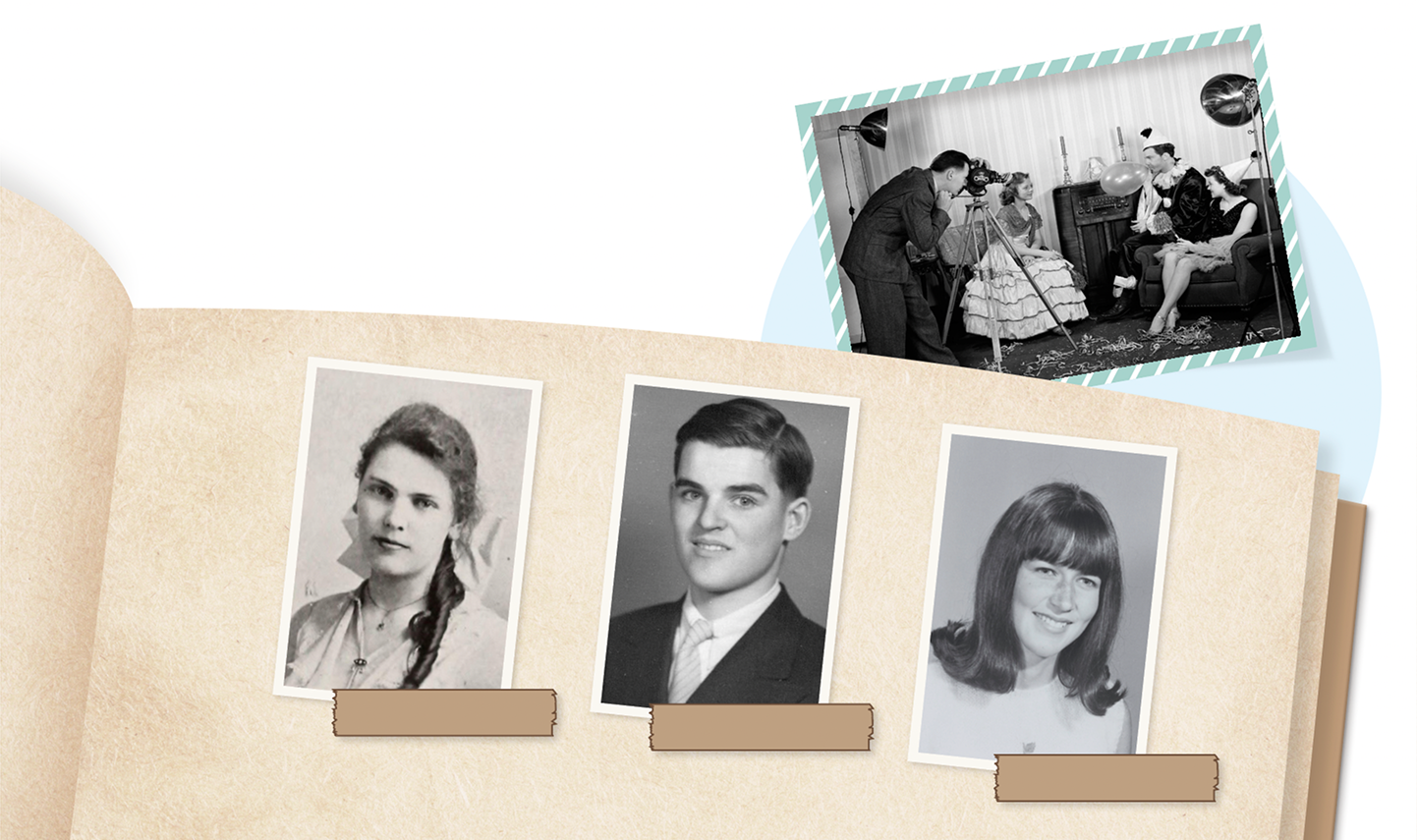
A team of computer scientists analyzed more than 37,000 U.S. high school yearbook portraits from 1905 to 2013.
They measured each person’s smile by comparing the shape of their mouths.
In the 1910s, lip angles were almost zero, meaning
mouths were mostly flat.
But in the post-World War II era,
people opened their mouths in their
yearbook photos.
Why did this
happen?
Class of 1910
Class of 1940
Class of 1960
해석

The Story of Smiling Selfies
미소 짓는 셀피 이야기
We take it for granted that we should smile for the camera.
우리는 카메라를 향해 웃어야 한다는 것을 당연하게 여긴다.
But a century ago, stone-faced photos were the norm.
그러나 한 세기 전에는, 돌처럼 굳은 표정의 얼굴 사진이 일반적인 것이었다.
The smiles we flash for the camera today are about ten times bigger than the smiles photographed 100 years ago.
오늘날 우리가 카메라를 향해 짓는 미소는 100년 전에 촬영된 미소보다 약 10배 더 크다.
A team of computer scientists analyzed more than 37,000 U.S. high school yearbook portraits from 1905 to 2013.
한 컴퓨터 과학자팀이 1905년부터 2013년까지 미국 고등학교 졸업 앨범 사진 37,000장 이상을 분석했다.
They measured each person’s smile by comparing the shape of their mouths.
그들은 입 모양을 비교하여 각 사람의 미소를 측정했다.
In the 1910s, lip angles were almost zero, meaning mouths were mostly flat.
1910년대에는 입술 각도는 거의 0에 가까웠고, 그것은 입이 거의 평평했다는 것을 의미했다.
But in the post-World War II era, people opened their mouths in their yearbook photos.
그러나 제2차 세계대전 이후 시대에는 졸업앨범 사진에서 사람들이 입을 벌리고 있었다.
Why did this happen?
이 일은 왜 일어났을까?
전체 해석보기
문장별 해석보기
듣기