Paragraph 3
These words hit Mr. Levering hard.
They made him uneasy and unable to enjoy his family’s company.
He had to take a long walk to calm himself down before retiring to bed.


Paragraph 4
The next day, the customer from the day before entered his store.
His heart raced, thinking she realized he had overcharged her and had come to condemn him.
However, she didn’t suspect anything.
She actually bought more things.
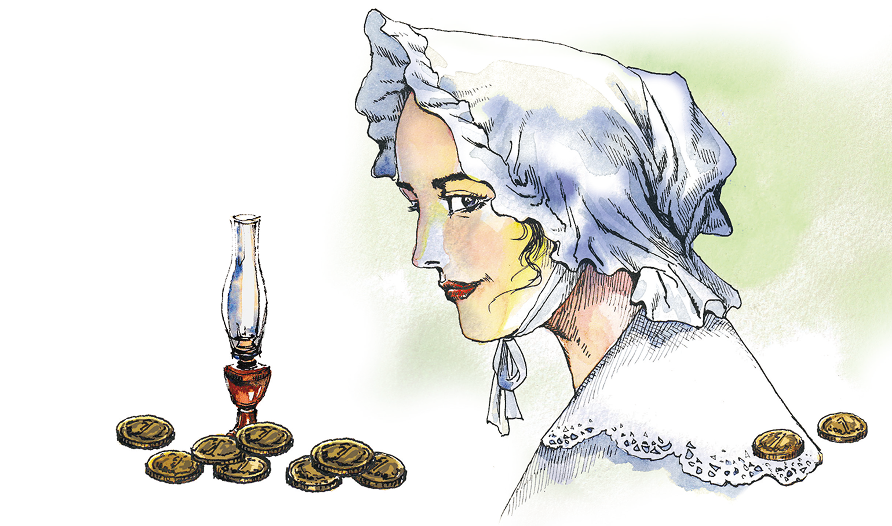
Giving her change back, Mr. Levering thought, “That weight shall be off my conscience,” and gave her an extra dollar.
He was hoping that doing that would relieve
his guilt.
Unfortunately for him, she noticed the “error,” and he
reluctantly took the dollar back.
These words hit Mr. Levering hard.

사물(These words)이 주어인 물주 구문으로, 의인화된 표현(These words hit)으로 문장에 생동감을 주고 있다.

He had to take a long walk to calm himself down before retiring to bed.

to calm himself down before retiring to bed는 목적을 나타내는 부사적 용법의 to부정사구이다.

주어와 calm의 목적어가 같으므로 재귀대명사 himself가 목적어로 쓰였다.

before는 전치사로 쓰여서 동명사구가 목적어로 왔다.

He was hoping that doing that would relieve his guilt.

that doing that would relieve his guilt는 was hoping의 목적어로 쓰인 명사절이다.

doing that은 명사절의 주어로 쓰인 동명사구로, 앞 문장의 giving her an extra dollar를 가리킨다.

Unfortunately for him, she noticed the “error,” and he reluctantly took the dollar back.

“error”가 큰따옴표로 묶인 것은 실제 오류가 아닐 수도 있다는 뉘앙스를 전달하기 위해서이다. 이처럼 영어에서는 아이러니나 반어적 의미를 내포하는 표현에 강조의 의미를 더하기 위해 따옴표를 사용한다.

What this means is that while a 40-minute run will burn 400 calories, doing small things like more walking, taking stairs, or even just cleaning your room can add up at the end of the day, too.

What this means에서 What은 The thing which〔that〕의 의미로 선행사 (The thing)를 내포하는 관계대명사이다.

보어로 쓰인 that절 안에 while이 이끄는 종속절이 하나 더 있는 문장으로, doing small things like more walking, taking stairs, or even just cleaning your room이 that절의 주어이고 can add up이 that절의 동사이다.

Read 해석

These words hit Mr. Levering hard.
이 말들은 레버링 씨에게 깊은 충격을 주었다.
They made him uneasy and unable to enjoy his family’s company.
그 말은 그를 불안하게 만들었고 가족과 함께하는 시간을 즐길 수 없도록 만들었다.
He had to take a long walk to calm himself down before retiring to bed.
그는 잠자리에 들기 전에 마음을 가라앉히기 위해 긴 산책을 해야 했다.
The next day, the customer from the day before entered his store.
다음날, 어제의 손님이 그의 가게에 들어왔다.
His heart raced, thinking she realized he had overcharged her and had come to condemn him.
여자가 자신이 돈을 더 받았다는 걸 알아차리고 비난하러 온 거라고 생각하자, 그는 가슴이 두근거렸다.
However, she didn’t suspect anything.
그러나 여자는 아무것도 의심하지 않았다.
She actually bought more things.
오히려 여자는 더 많은 물건을 샀다.
Giving her change back, Mr. Levering thought, “That weight shall be off my conscience,” and gave her an extra dollar.
여자에게 거스름돈을 건네며, 레버링 씨는 ‘이제 양심의 짐을 덜 수 있겠어.’라는 생각과 함께 여자에게 1달러를
더 건넸다.
He was hoping that doing that would relieve his guilt.
그는 그렇게 하는 것이 죄책감을 달래주길 바라고 있었다.
Unfortunately for him, she noticed the “error,” and he reluctantly took the dollar back.
애석하게도, 여자는 그 ‘실수’를 알아차렸고, 그는 마지못해 1달러를 돌려받아야 했다.
전체 해석보기
문장별 해석보기
듣기