Every sporting event affects the environment before, during, and even after it.
모든 스포츠 대회는 개최 전, 진행 중, 그리고 종료 후에도 환경에 영향을 미친다.
For example, a long-track speed skating competition can only take place, provided that the ice of a 400-meter oval track is frozen until it is 3 to 5 cm thick.
예를 들어, 장거리 스피드 스케이팅 경기는 400m 타원형 트랙의 얼음이 3~5cm 두께로 얼어 있어야만 진행될 수
있다.
As long as the competition is on, the track needs to be kept frozen by specialized refrigeration systems while the temperature, humidity, and air quality inside the stadium also have to be maintained for optimal ice conditions.
경기가 진행되는 한, 트랙이 특수 냉각 시스템에 의해 언 상태로 유지되어야 하며, 최적의 빙질을 위해 경기장
내부의 온도, 습도, 공기 질 또한 유지되어야 한다.
Additionally, all of the stadium employees, athletes, and spectators need to travel to and from the stadium, often from other cities or even from abroad.
또한, 모든 경기장 직원들, 선수들, 그리고 관중들은 경기장과 경기장, 다른 도시, 심지어 해외 사이를 오가야 한다.
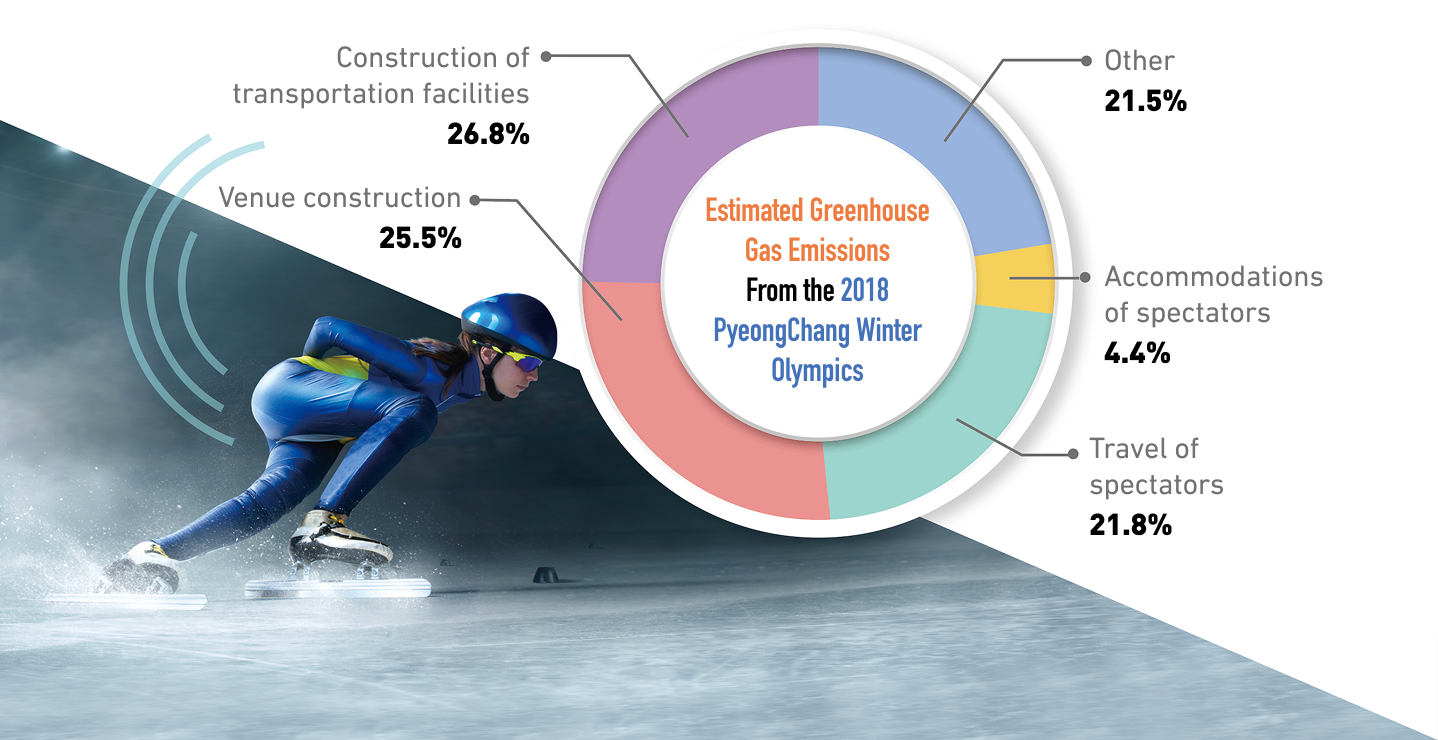
In fact, more than 25% of the emissions generated by the 2018 Pyeong Chang Winter Olympics are estimated to be caused by fan travel and accommodations.
실제로 2018 평창 동계 올림픽에서 발생한 배기가스의 25% 이상이 팬들의 이동과 숙박으로 발생한 것으로
추정된다.
During the event, spectators and athletes eat and drink, and the plastic bottles and wrappers of whatever they consumed leave trash cans overflowing.
대회 기간 동안, 관중들과 선수들은 먹고 마시며, 무엇을 소비했든 간에 그 플라스틱 병과 포장지 때문에 쓰레기통이
넘쳐난다.
After the event has ended, in addition to the significant amount of trash that needs to be disposed of, the effects those people caused and the emissions generated from their travel continue to have a lasting negative impact on air quality.
대회가 종료된 후에도, 처리되어야 할 막대한 양의 쓰레기와 더불어, 그 사람들이 초래한 영향과 이동 중에 나온
배기가스는 대기 질에 지속적으로 부정적 영향을 미친다.