Physical Activities and NEAT
Paragraph 4
Then, what do people do with the remaining 400 calories?
They may be burned by intense physical exercise like jogging, working out at the gym, playing badminton or tennis, or venturing out for a hike.
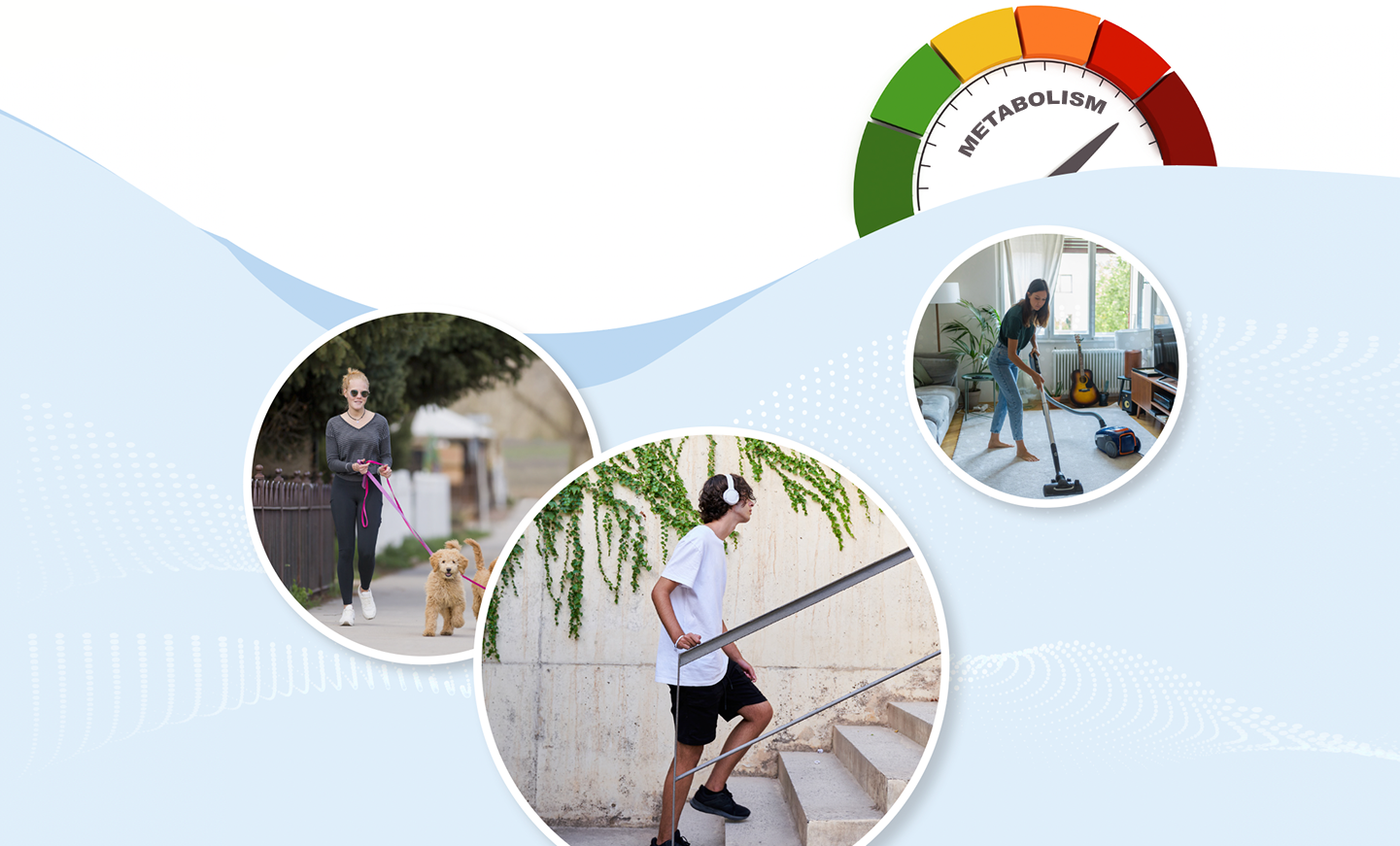
However, those calories may also be burned by small, seemingly unimportant activities we do throughout the day, like standing up and sitting down, walking around the house, washing dishes, doing the laundry, taking out the garbage, and many others.
These actions are collectively called Non-Exercise Activity Thermogenesis (NEAT) as they use up energy too!
For example, a
40-minute run will burn around 400 calories.
Doing this could use up the excess energy budget completely, but not everyone has 40 minutes a day to go for a run.
Taking 10,000 steps, which is like walking about 8 kilometers, burns 400 calories as well.
What this means is that while a 40-minute run will burn 400 calories, doing small things like
more walking, taking stairs, or even just cleaning your
room can add up at the end of the day, too.
They may be burned by intense physical exercise like jogging, working out at the gym, playing badminton or tennis, or venturing out for a hike.

may be burned by intense physical exercise는 「조동사 + be동사 + p.p. + by + 행위자」 형태의 수동태 구문이다.

like 이하에는 전치사 like의 목적어인 동명사구가 「A, B, C, or D」 구문의 형태로 쓰였다.

However, those calories may also be burned by small, seemingly unimportant activities we do throughout the day, like standing up and sitting down, walking around the house, washing dishes, doing the laundry, taking out the garbage, and many others.

small, seemingly unimportant activities we do throughout the day에서 we do throughout the day는 small, seemingly unimportant activities를 수식하는 형용사절로 we 앞에는 목적격 관계대명사가 생략되었다.

Doing this could use up the excess energy budget completely, but not everyone has 40 minutes a day to go for a run.

not everyone은 ‘모두가 ~한 것은 아니다’라는 의미를 가지는 부분 부정의 표현이다. 다른 부분 부정 표현은 「not + all〔always, both, completely, everybody〕」가 있다.

Taking 10,000 steps, which is like walking about 8 kilometers, burns 400 calories as well.

Taking 10,000 steps가 문장의 주어이고 burns가 동사이다.

which는 주격 관계대명사로, Taking 10,000 steps가 선행사이다.

What this means is that while a 40-minute run will burn 400 calories, doing small things like more walking, taking stairs, or even just cleaning your room can add up at the end of the day, too.

What this means에서 What은 The thing which〔that〕의 의미로 선행사 (The thing)를 내포하는 관계대명사이다.

보어로 쓰인 that절 안에 while이 이끄는 종속절이 하나 더 있는 문장으로, doing small things like more walking, taking stairs, or even just cleaning your room이 that절의 주어이고 can add up이 that절의 동사이다.

Read 해석

Physical Activities and NEAT
신체 활동과 NEAT
Then, what do people do with the remaining 400 calories?
그렇다면 사람들은 남은 400 칼로리를 어떻게 사용할까?
They may be burned by intense physical exercise like jogging, working out at the gym, playing badminton or tennis, or venturing out for a hike.
조깅, 헬스장에서 운동하기, 배드민턴이나 테니스 치기, 하이킹하러 가는 것 같은 격렬한 신체 운동으로 소모될 수
있다.
However, those calories may also be burned by small, seemingly unimportant activities we do throughout the day, like standing up and sitting down, walking around the house, washing dishes, doing the laundry, taking out the garbage, and many others.
그러나 이 칼로리는 일어서고 앉기, 집에서 돌아다니기, 설거지하기, 빨래하기, 쓰레기 내다 버리기 등 우리가
하루 종일 하는 사소해 보이는 작은 활동에서도 소모될 수 있다.
These actions are collectively called Non-Exercise Activity Thermogenesis (NEAT) as they use up energy too!
이러한 행동 또한 에너지를 소모하기 때문에 비운동성 활동 열 생성(NEAT)이라고 통칭한다!
For example, a 40-minute run will burn around 400 calories.
예를 들어, 40분 달리기는 약 400 칼로리를 소모한다.
Doing this could use up the excess energy budget completely, but not everyone has 40 minutes a day to go for a run.
이렇게 하면 과잉 에너지양을 완전히 소진할 수 있지만, 모든 사람이 하루에 40분씩 달리기를 할 수 있는 것은
아니다.
Taking 10,000 steps, which is like walking about 8 kilometers, burns 400 calories as well.
약 8km를 걷는 것과 같은 10,000보 걷기 역시 400 칼로리를 소모한다.
What this means is that while a 40-minute run will burn 400 calories, doing small things like more walking, taking stairs, or even just cleaning your room can add up at the end of the day, too.
이 말인즉슨, 40분 동안 달리기를 하면 400 칼로리가 소모되지만, 더 많이 걷거나 계단을 이용하거나 단지 방을
청소하는 등의 작은 활동도 하루가 끝날 때 합산될 수 있다는 뜻이다.
전체 해석보기
문장별 해석보기
듣기